
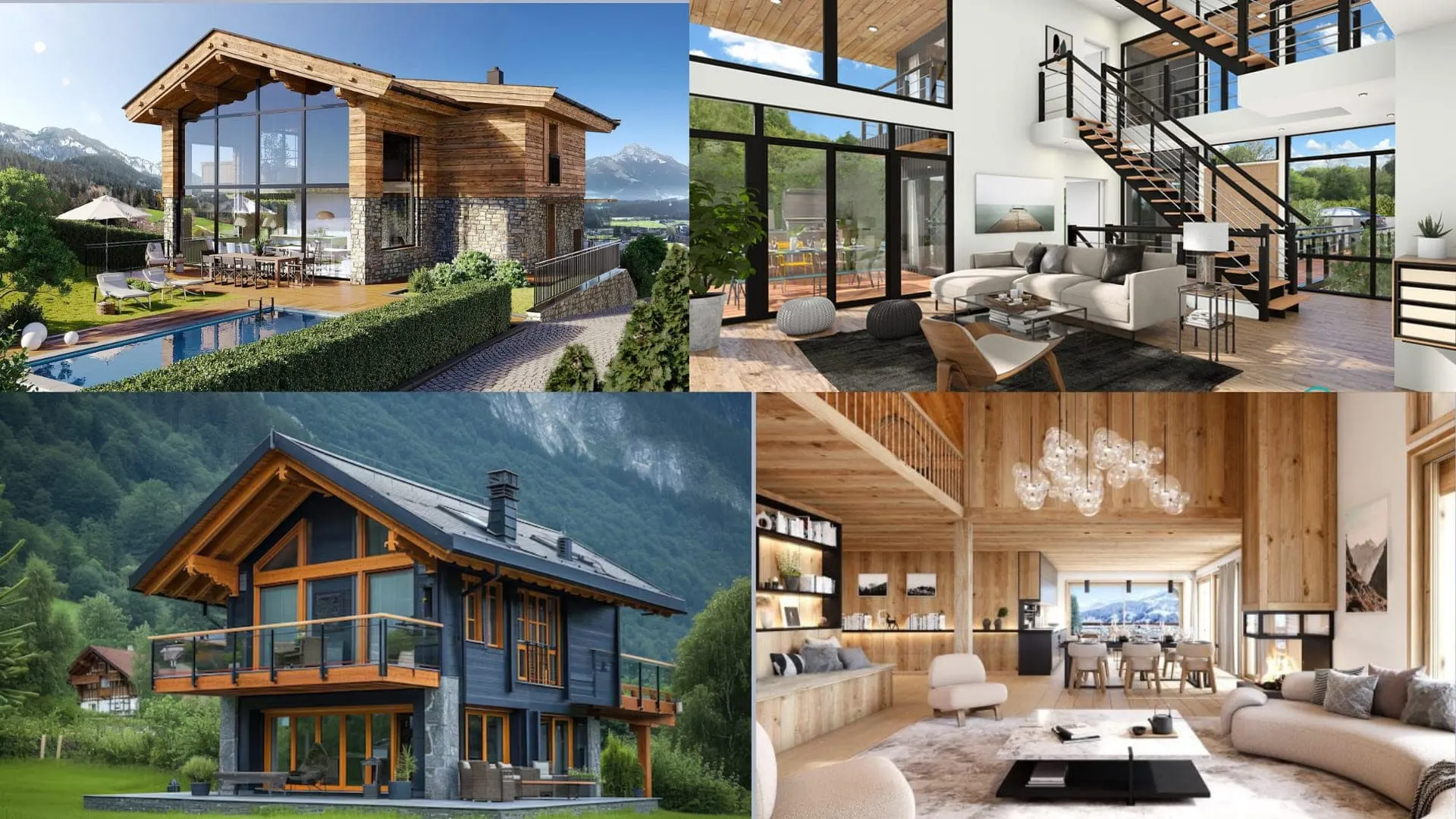
Move beyond rustic clichés. Discover the 10 defining principles of modern chalet living room design, where architectural warmth meets contemporary minimalism for timeless, stylish interiors.
For decades, the term “chalet style” conjured a specific, nostalgia-heavy image: dark timber, roaring hearths, and layered rustic ornament. Today, that archetype has been thoughtfully deconstructed and elegantly rebuilt. The contemporary chalet living room is no longer a theme but an architectural philosophy—a serene dialogue between mountain-born materiality and global, minimalist refinement. This is not a trend; it is an evolution of comfort, prioritizing calm coherence over visual clutter, and tactile warmth over decorative noise.
Driven by a desire for sanctuary, this design language transforms the classic cabin into a canvas of light, texture, and intentional form. It proves that a space can feel profoundly grounded and expansively contemporary simultaneously. Below, we dissect the ten core principles that define this sophisticated and enduring style.
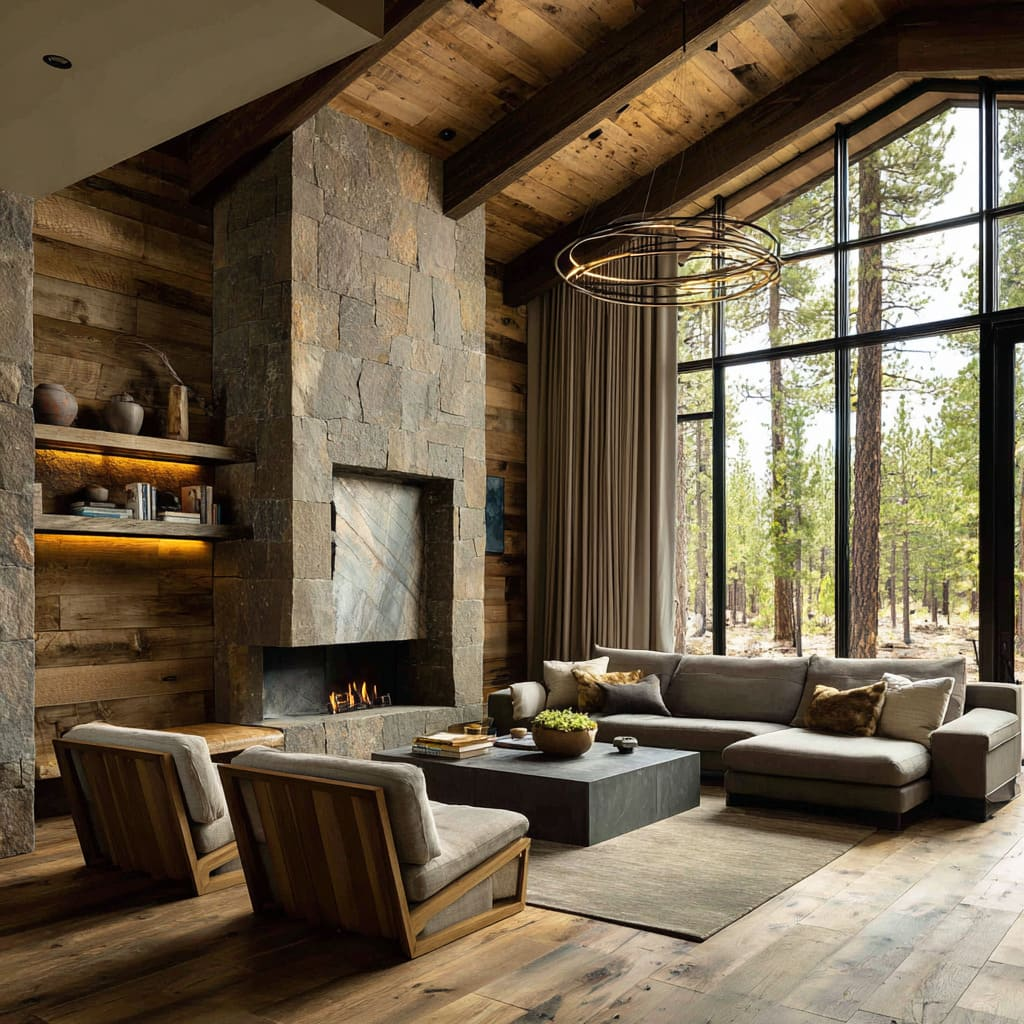
1. Architectural Framework Over Themed Décor
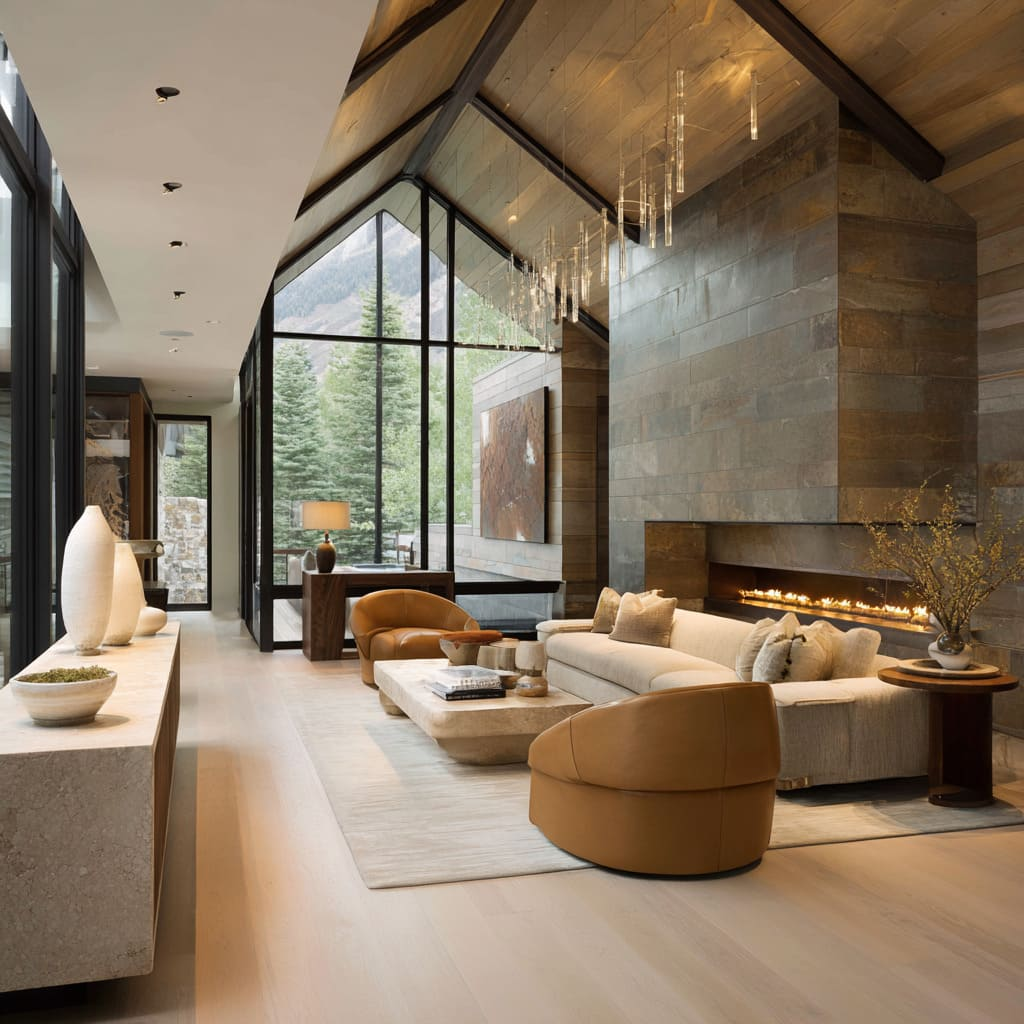
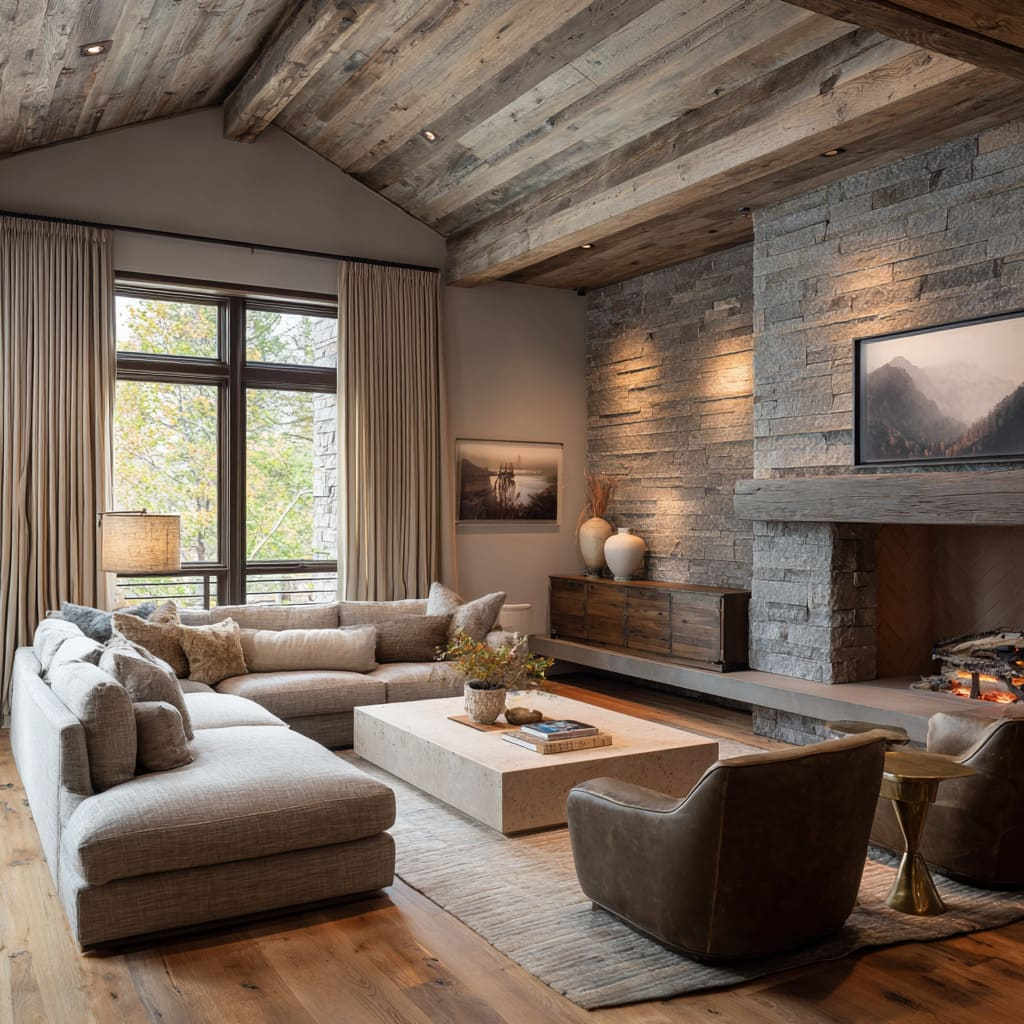
The foundation of modern chalet design is a shift in perspective. Designers now treat the traditional timber-and-fireplace structure as an inherent architectural composition, not a decorative theme to be embellished. The goal is to highlight the building’s innate geometry—the pitch of the roof, the line of a beam, the plane of a wall—allowing structure itself to define the aesthetic mood.
2. The Sculptural, Horizontal Fireplace
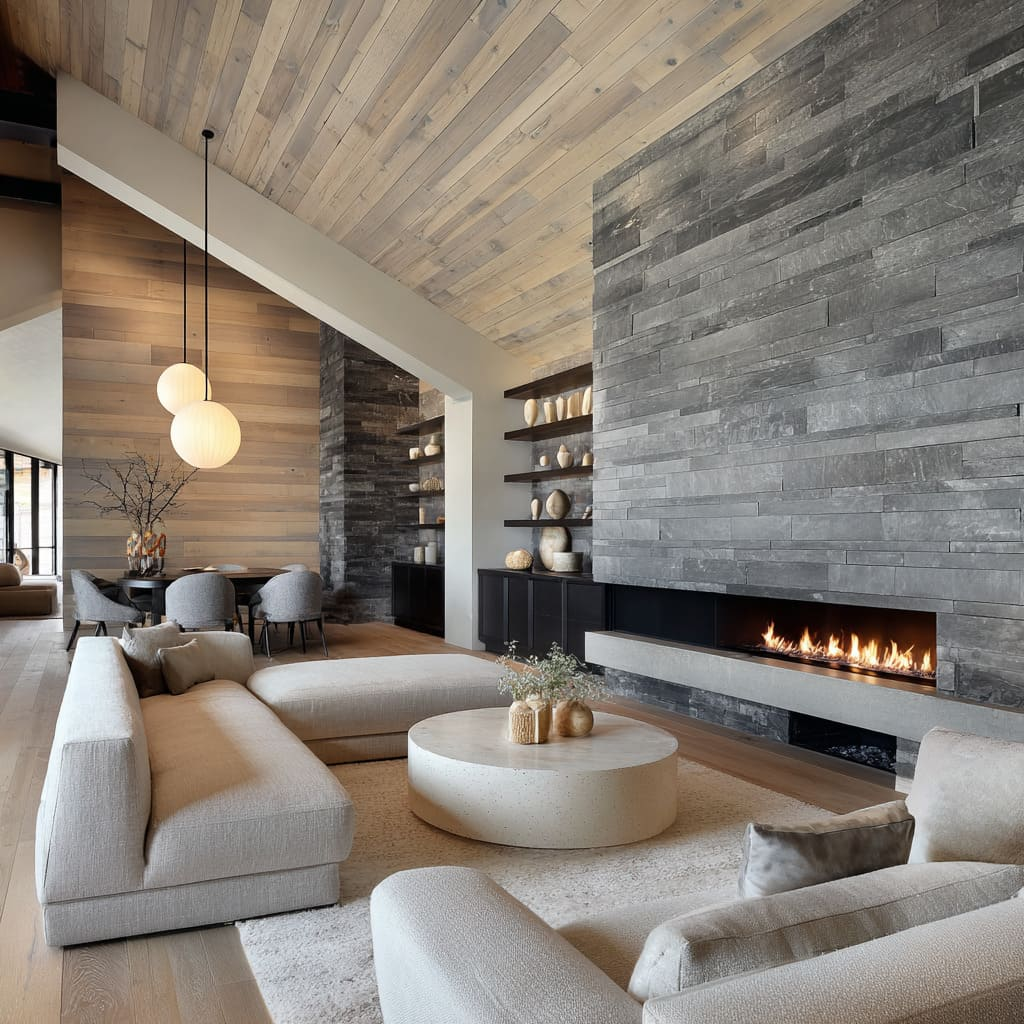
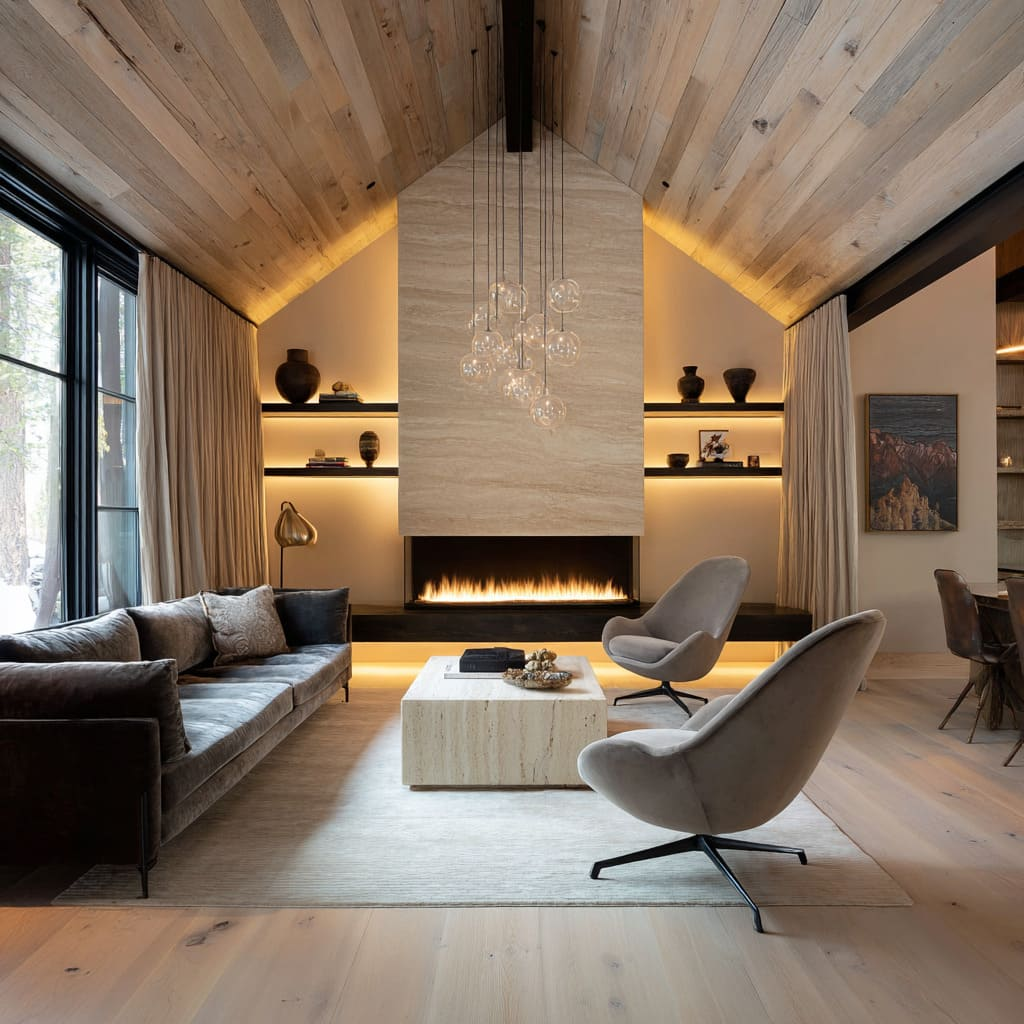
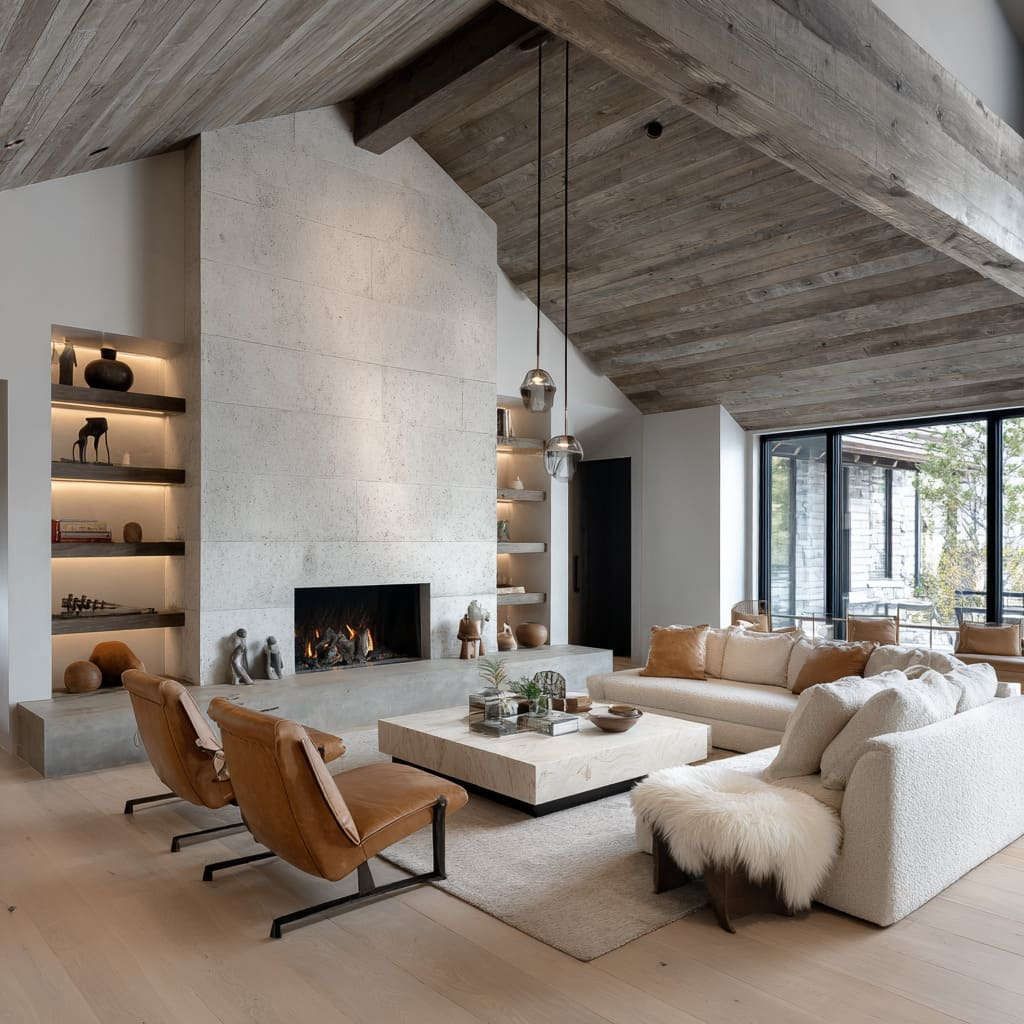
Gone is the bulky, roaring stone hearth as a focal point. In its place is the long, low ribbon fireplace. This horizontal line acts as the room’s calm baseline, a linear element where flame becomes an integrated design feature. The surrounding material—often smooth travertine, fluted limestone, or split-face slate—is treated as a monolithic, sculptural wall, catching light and shadow with quiet drama.
3. Ceilings that Draw Themselves
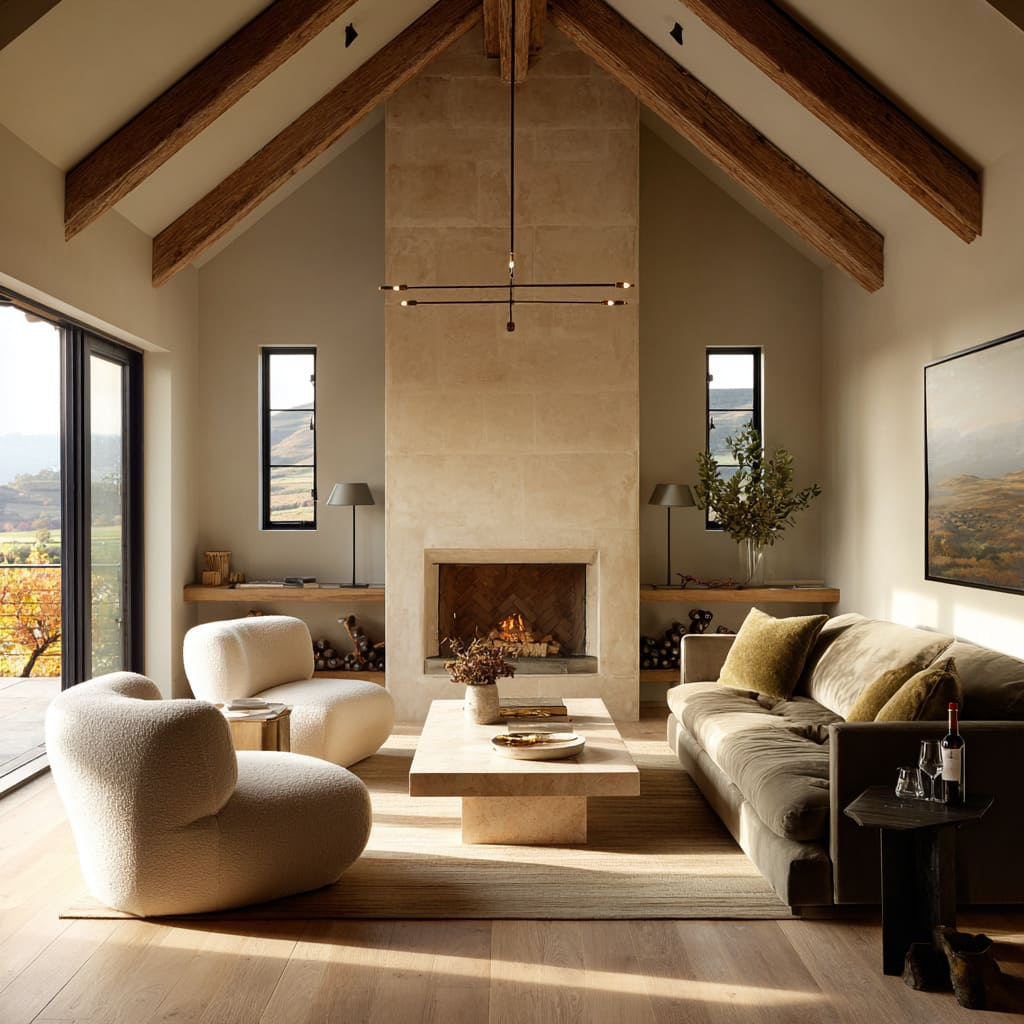
The roof structure is elevated from mere construction to graphic artwork. Beams are cleaned up and often highlighted with concealed LED ribbons that trace their lines, etching the geometry in light after dark. Contrasting stains (dark beams against pale planks) can create a pencil-sketch effect, while lime-washed boards preserve grain for texture without rusticity.
4. Light as an Integral Material
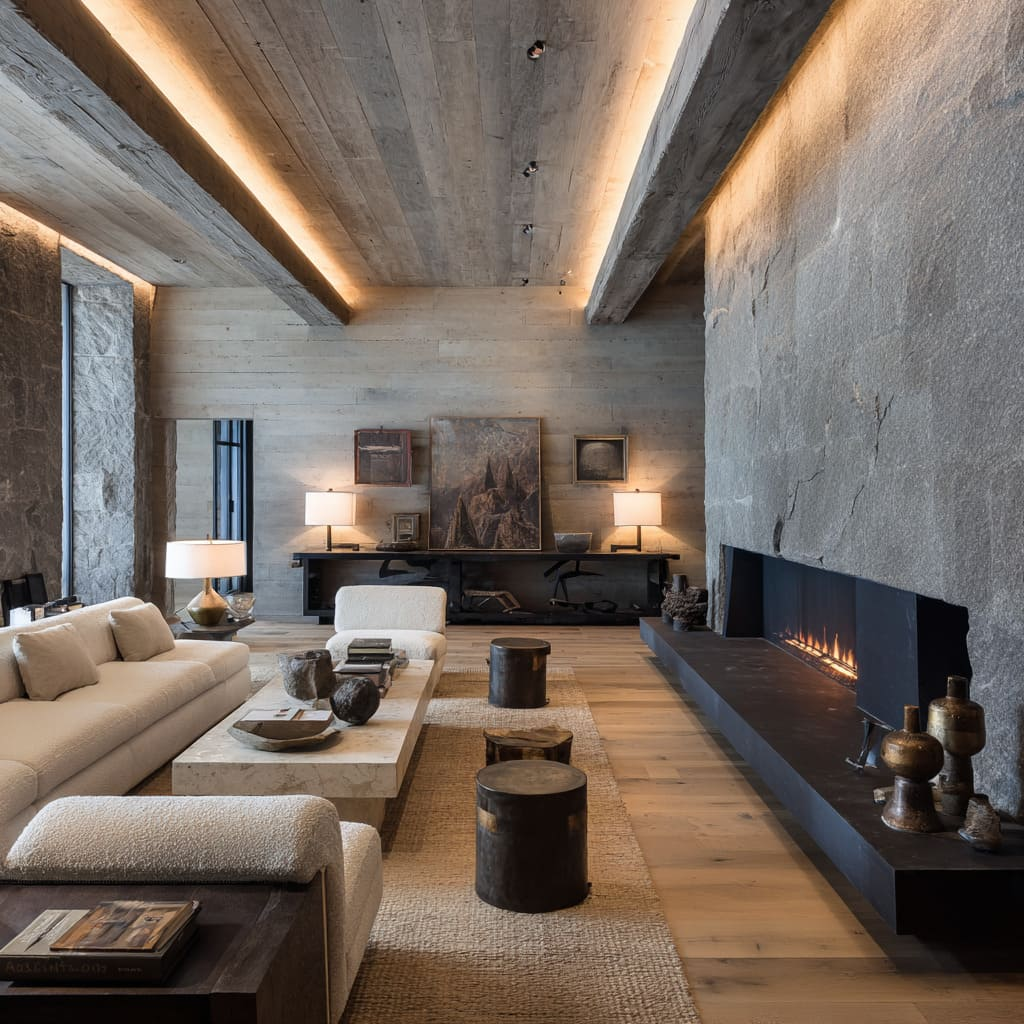
Lighting is meticulously engineered as a built-in material, not an afterthought. Linear glows are hidden behind hearth ledges, within shelves, and under benches to graze textures and define volumes. This eliminates the need for obstructive ceiling cans. When pendants are used, they are minimal clusters (alabaster spheres, glass orbs) hung low to define space without blocking sightlines, creating intimacy.
5. A “Low Island” of Soft, Curved Seating
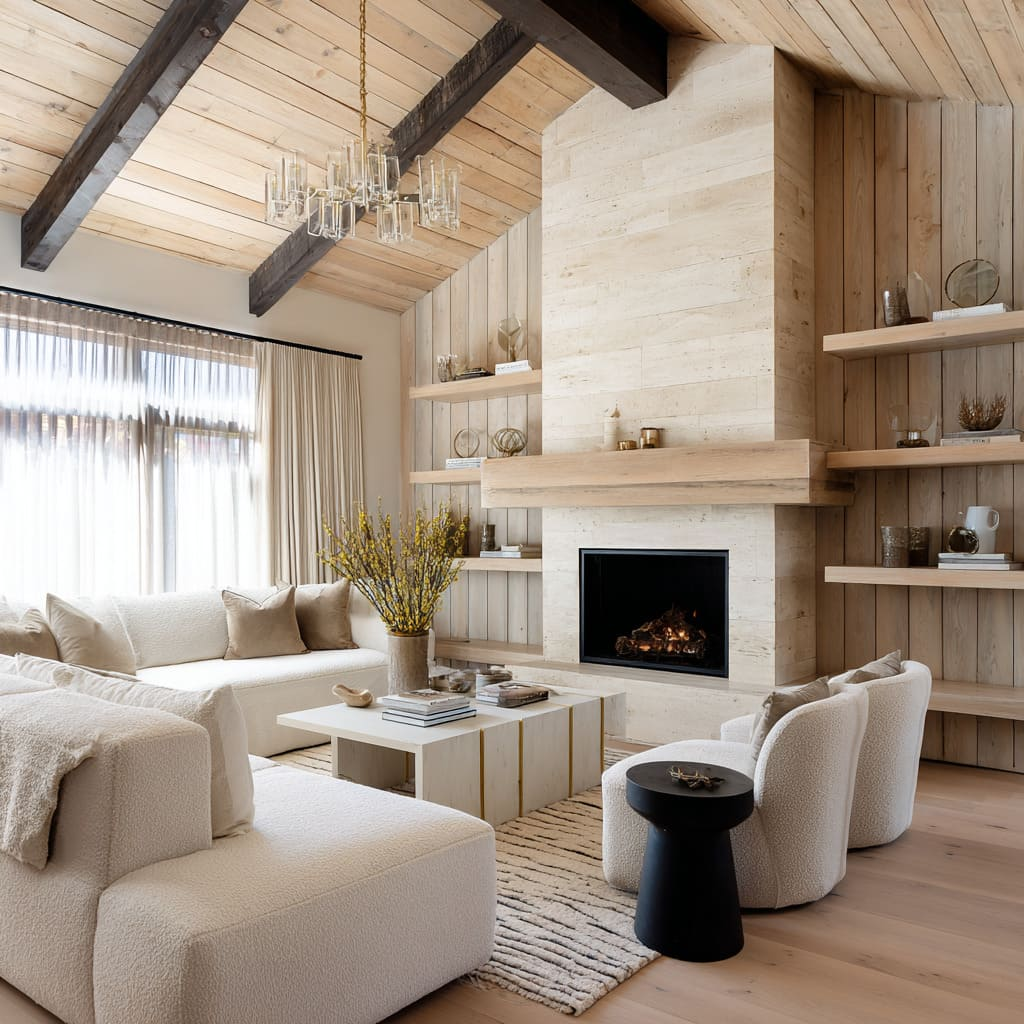
Furniture arrangement follows a principle of grounded consolidation. Seating is curated into a single, low-profile “island”—often featuring rounded, organic forms like bouclé sectionals, swivel chairs, and drum tables. This contrasts the room’s strong linear architecture, builds balance, and ensures the space feels open and fluid, not piecemeal.
6. Texture as the Primary Ornament
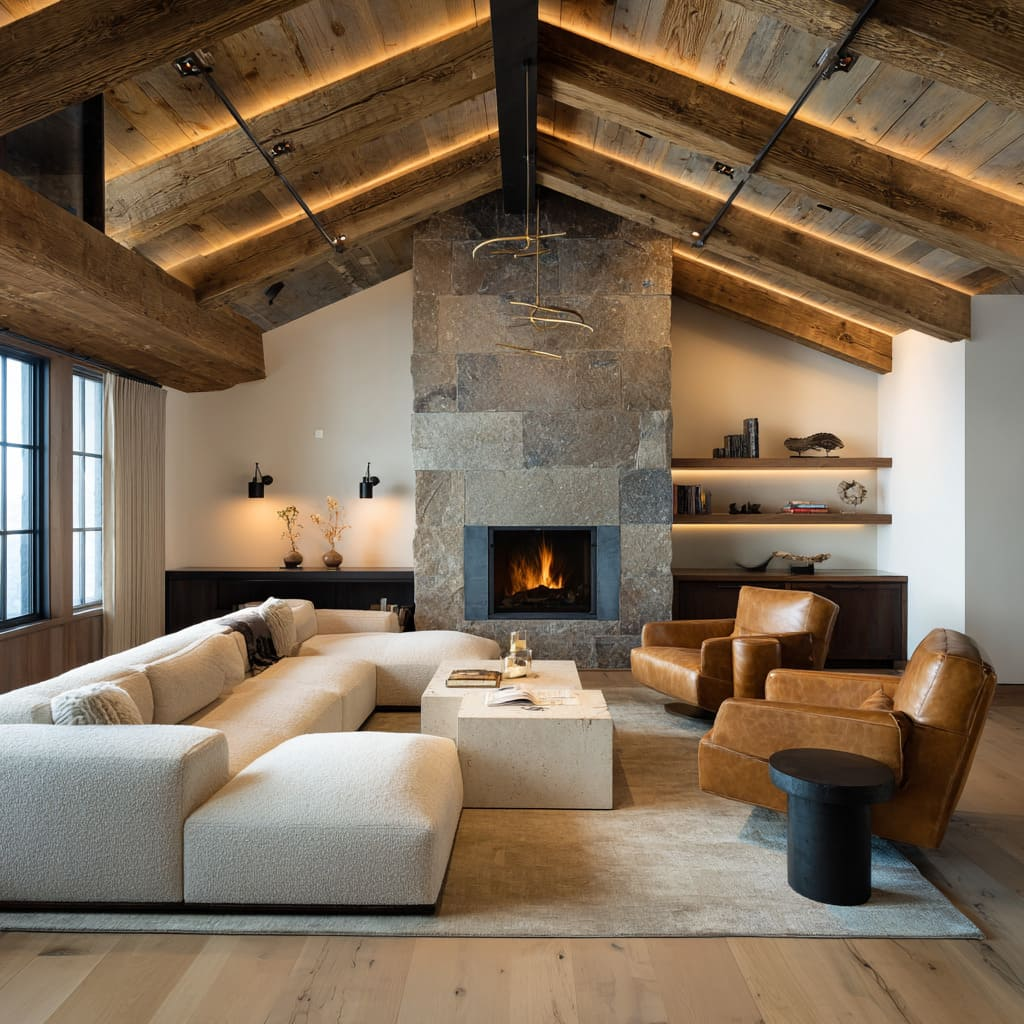
Pattern is retired in favor of a hierarchical textural narrative. Smooth plaster walls contrast with the grain of cleaned-up timber. Fabrics are chosen for their tactile qualities: nubby bouclé, slubby linen, soft velvet, and tight twill. Even stone is selected for its finish—honed, fluted, or ribbed. The eye moves slowly, finding richness in the interplay of shadow and surface.
7. A Disciplined, Monochromatic Palette
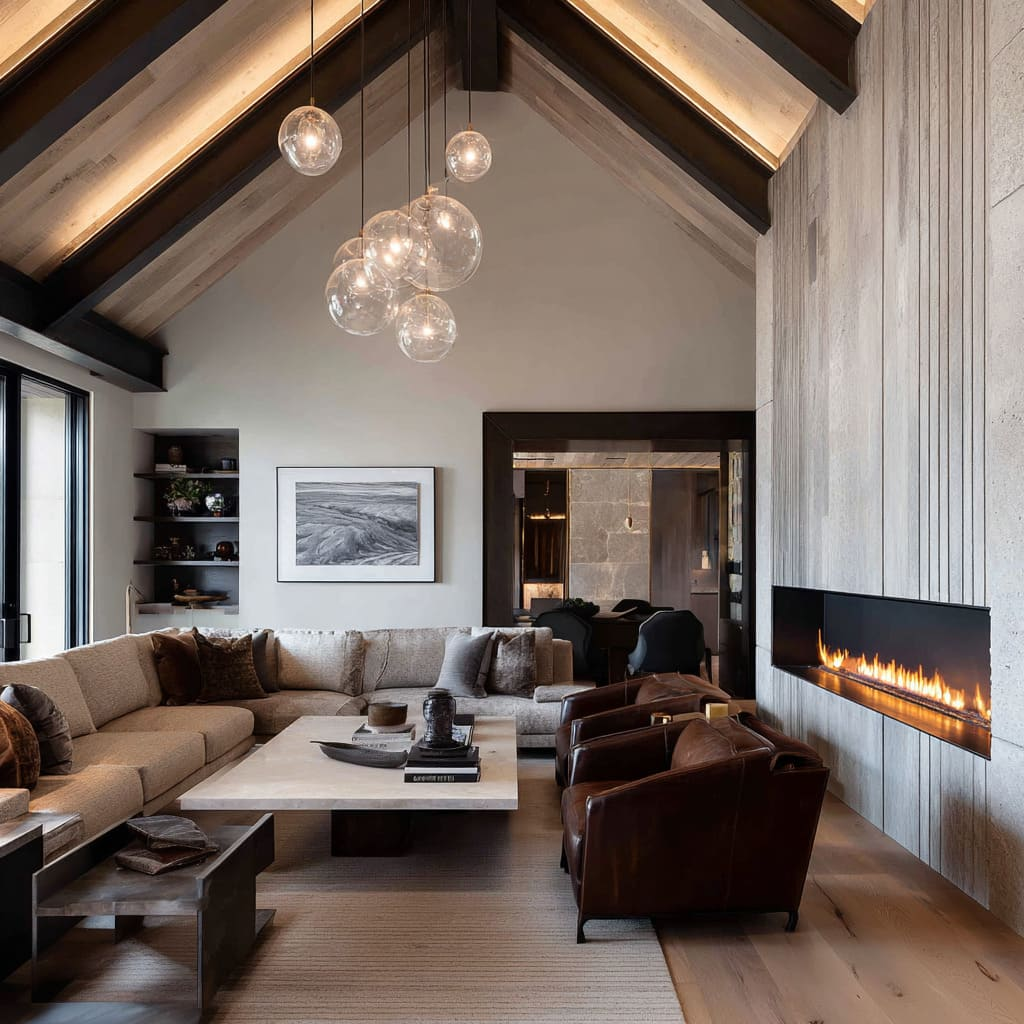
Color is restrained to a natural, monochromatic spectrum: sand, stone, smoke, camel, and deep off-black. Freshness is injected through precise, sharp accents—black window frames, iron shelf brackets, or a darkened ridge beam that punctuates the scheme. Any color is used once, as a deliberate signature (e.g., a pair of teal chairs), maintaining a cinematic, curated feel.
8. Shelving and Display as Light Architecture
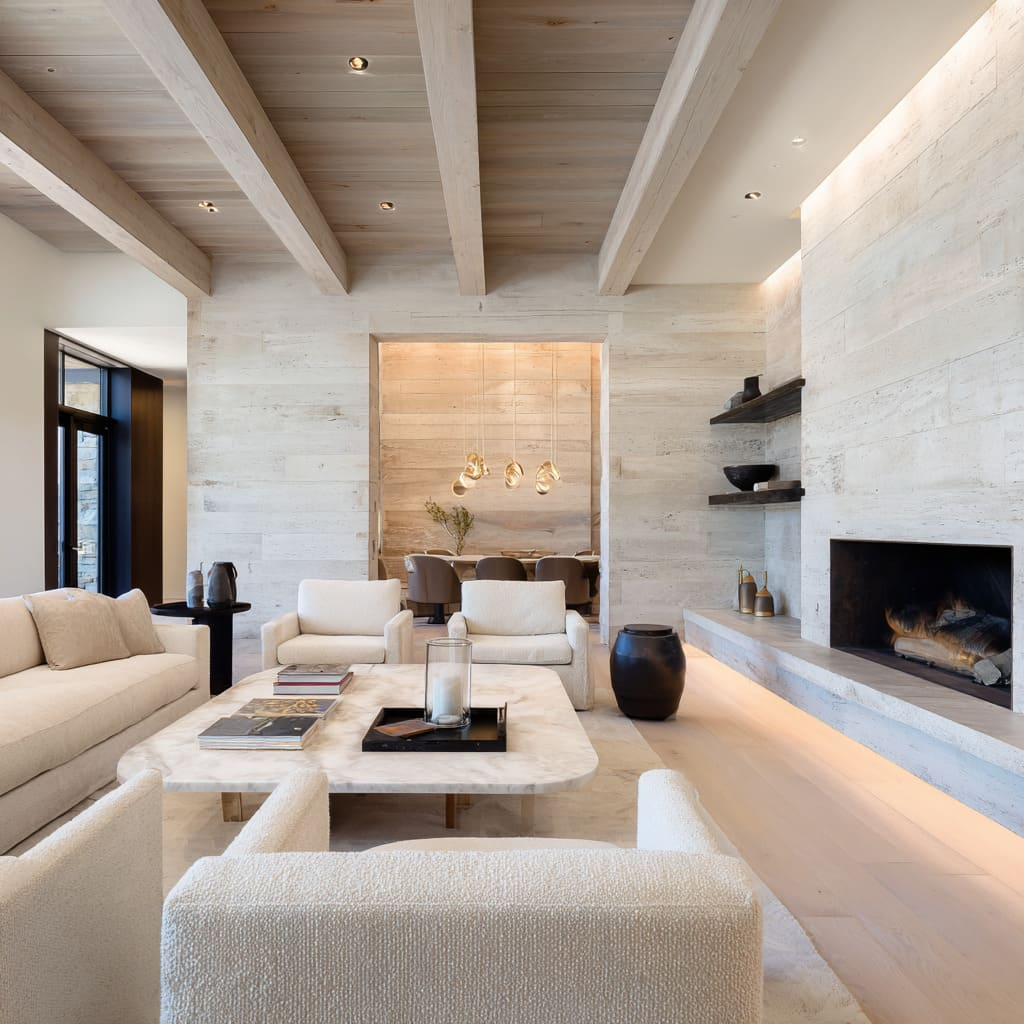
Storage and display are seamlessly integrated. Shallow, backlit niches or floating ledges replace heavy cabinets. They hold curated, minimal collections (all ceramic, all wood) with ample negative space, making the display a glowing architectural band that adds depth, not clutter. The glow outlines silhouettes, creating atmosphere.
9. The Mix of Global Influences
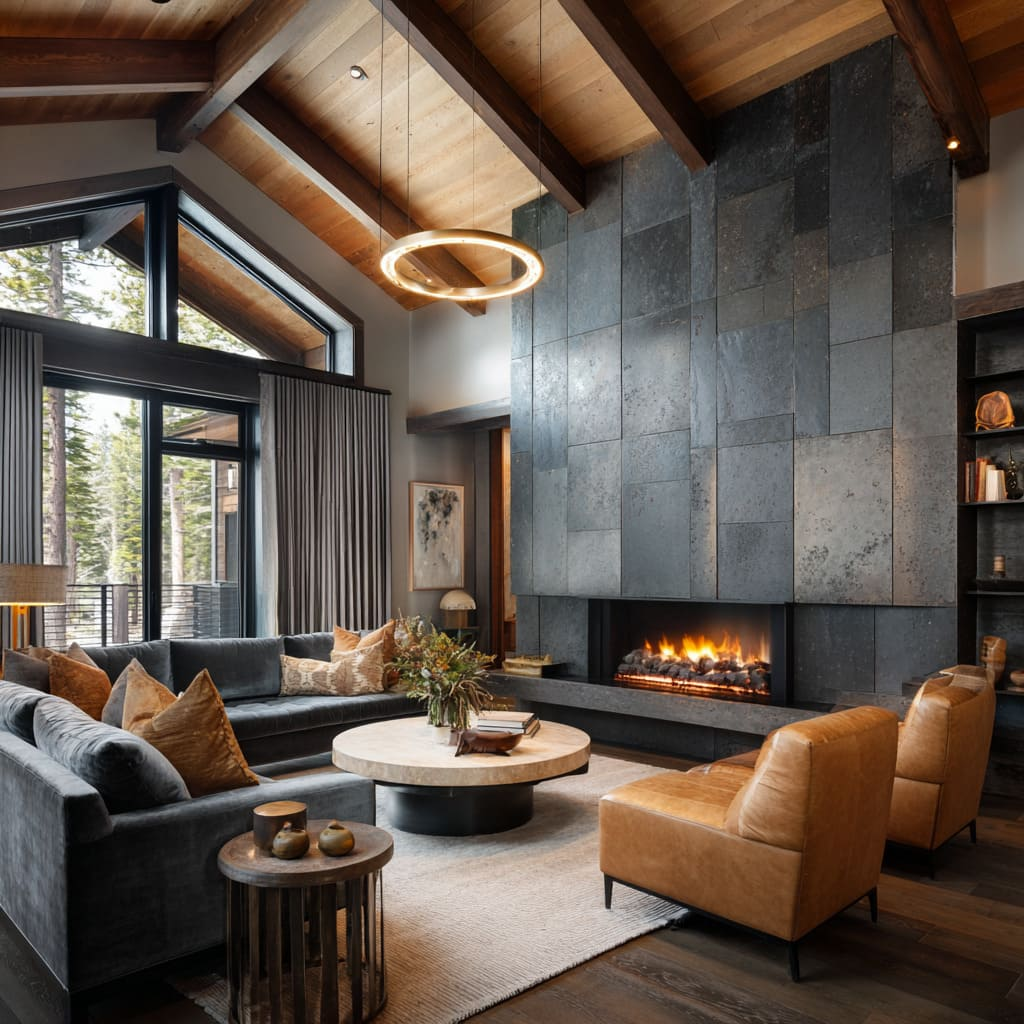
The modern chalet is confidently hybrid. While rooted in mountain architecture, it freely incorporates urban polish. It can lean into gallery minimalism with travertine and black steel, evoke a club-like mood with leather and pleated drapery, or adopt a coastal lightness with plaster and pale oak. The shared principle is “calm strength.”
10. Coherence as the Source of Warmth
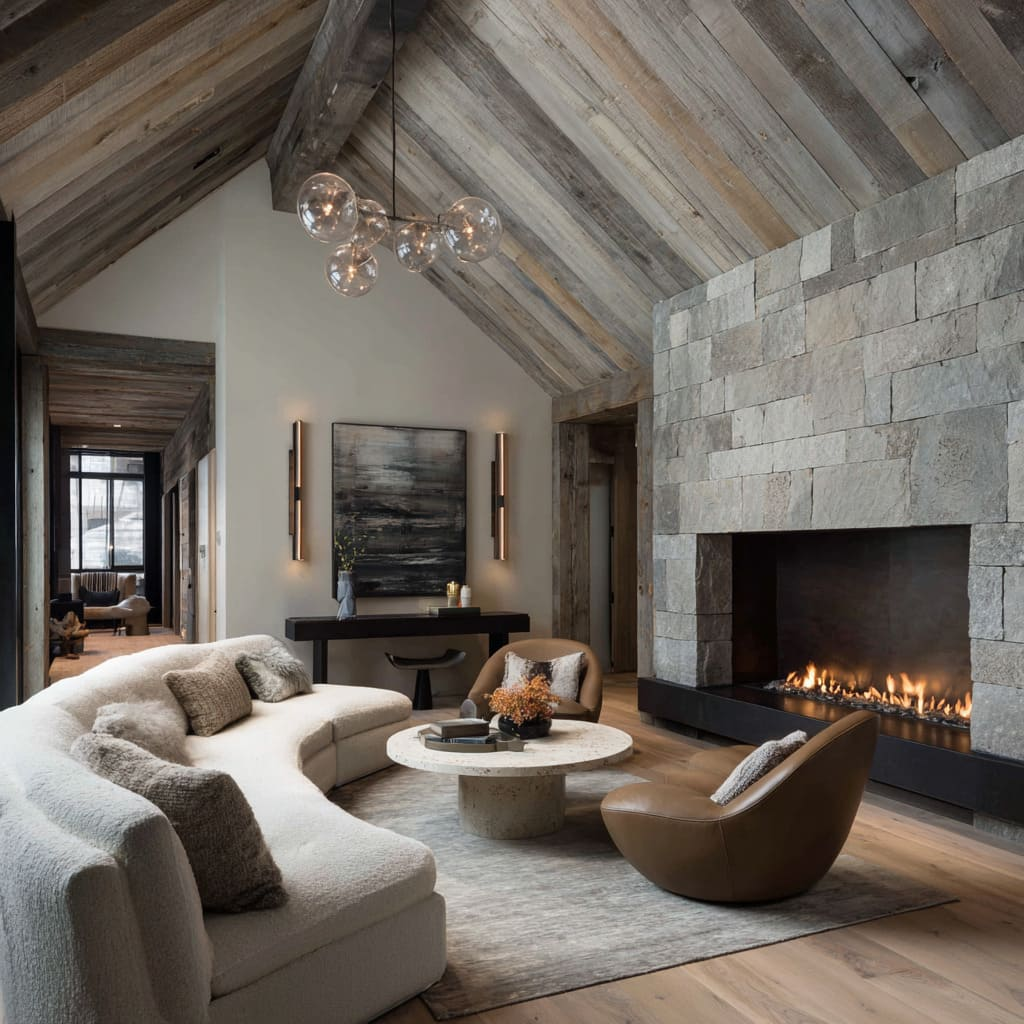
Ultimately, the emotional power of these spaces comes from coherence, not quantity. Warmth is generated not by accumulating rustic artifacts but by the harmonious relationship of every element—from the ridge beam to the rug. Every surface, edge, and material choice contributes to a unified, soft order, creating a sanctuary of quiet confidence.
Frequently Asked Questions (FAQ)
Q1: Can modern chalet style work in a non-mountain home, like a city apartment?
A: Absolutely. The principles are adaptable. Focus on incorporating one or two core elements—like a linear electric fireplace, a textured plaster wall, a palette of natural neutrals with sharp black accents, and furniture with soft, rounded forms. The style is about an attitude of textured, structured warmth, not a literal location.
Q2: Isn’t all-white and pale wood too cold for a cozy chalet feel?
A: The warmth in modern chalet design comes from texture and light, not dark color. A lime-washed oak ceiling has immense visual warmth from its grain. A bouclé sofa is irresistibly tactile. Concealed lighting creates a soft, embracing glow. The result is a different, more serene kind of coziness that avoids heaviness.
Q3: How do I avoid my modern chalet living room looking too sterile or minimalist?
A: The key is textural contrast. Pair smooth plaster with a rough-hewn beam. Place a nubby wool throw on a sleek leather chair. Use matte ceramics on a honed stone table. The “minimalism” here is about editing decorative clutter, not removing sensory richness. The texture provides the necessary visual and tactile interest.
Q4: What is the most important investment in a modern chalet-style redesign?
A: Prioritize architectural lighting and key material surfaces. Investing in a well-designed linear fireplace (or a realistic electric equivalent) and integrating concealed LED lighting to wash walls and highlight ceilings will have the most transformative impact. These elements define the architectural mood more than any single piece of furniture.
Conclusion: The New Language of Refuge
The modern chalet living room design is a masterclass in balance. It lives in the resonant tension between weight and hush, solidity and softness, mountain legacy and contemporary clarity. It translates the alpine spirit into a universal language of refuge, proving that true comfort lies in thoughtful composition.
By embracing these principles—favoring coherence over clutter, mood over motif, and light over ornament—you create a space with a quiet, powerful staying power. It’s a design that doesn’t shout but calmly resonates, offering a timeless sanctuary for today and tomorrow.
Ready to translate the principles of modern chalet design into your own sanctuary?
Designing Your Sanctuary
The modern chalet living room represents a mature convergence of heritage and innovation. It masterfully balances the weight of material truth with the hush of serene space.
By embracing these principles—prioritizing coherence, celebrating texture, and engineering light—you move beyond decorating a room to architecting an experience.
Ready to architect your own sanctuary of calm, contemporary warmth?
Begin your transformation today. Book a one-on-one design consultation with our specialists, or explore our curated sourcebook of essential modern chalet furnishings to find the perfect foundational pieces. Your timeless retreat awaits.